
1. Overview of Ha Giang
Ha Giang is a beautiful province located in the northernmost region of Vietnam. Known for its stunning landscapes, rich cultural diversity, and fascinating history, Ha Giang is a must-visit destination for any traveler to Vietnam. The province is home to towering limestone mountains, cascading rice terraces, and winding rivers that create breathtaking natural scenery. Visitors have many things to do Ha Giang such as learn about the local way of life, taste delicious traditional dishes, and purchase unique handmade crafts. Whether you’re a nature lover, an adventure seeker, or a history buff, Ha Giang has something for everyone to discover and enjoy.

What’s new for 2027
- Since 1 July 2025 Ha Giang province has been merged into Tuyen Quang (the new province is called Tuyen Quang), and districts no longer exist in Vietnam; Yen Bai is now part of Lao Cai. We keep the familiar names (Ha Giang, Dong Van, Meo Vac) in this guide; map apps may show the new administrative names.
- We removed the old H’Mong King Palace ticket price; check the current fee at the ticket office, or explore the region in comfort on a private Ha Giang tour with Metta Voyage.
2. Top things to do Ha Giang
2.1. Explore attractions in Ha Giang
2.1.1. Lung Cu Flag Tower
Lung Cu Flag Tower is a must-visit destination for you when visiting Ha Giang. Lung Cu Flag Tower is in Lung Cu Commune of Dong Van District, consisting of a 30-meter tall tower on the top of Lung Cu Peak (around 1400m above sea level) and topped with a huge Vietnamese flag of 54 square meters area, representing the unity of Vietnam’s 54 ethnic groups. The flag tower was created to mark Vietnam’s northernmost point, although in fact the furthest north point on the Chinese-Vietnamese boundary is located under the Nho Que River, some 3 kilometers from the Lung Cu Flag Tower, near Xeo Lung hamlet. This is an excellent location for spectacular views of Dong Van, particularly the winding Happy Road below.
Opening hour: check locally
Entrance: check the current fee at the site

2.1.2. Dong Van Ancient Town
Dong Van Ancient Town is situated in a valley surrounded by rocks. The quarter was established in the early twentieth century with only a few Hmong, Tay, and Chinese families, but as time passed, more and more other area citizens discovered it. Generally, the historic quarter has Chinese architecture, with two-story dwellings with both yang and yin roofs, red lanterns, and so on.
When coming to Dong Van Town, you should visit Dong Van Market – a historic market located in the complex of Dong Van Old Quarter that runs as a weekly fair (ask your guide or hotel which day it is held). The small and calm ancient town becomes boisterous and crowded like a celebration on market day, with colorful costumes of the ethnic communities. You also can buy some souvenirs or try local cuisine at this market.

2.1.3. H’Mong King Palace
H’Mong King Palace, also known as Vuong Family Palace or H’Mong Palace, is a historic landmark located in Ha Giang. The palace was built in the early 20th century with a mix of Chinese and French architectural styles, featuring intricate wood carvings, beautiful tilework, and a distinctive blue roof. It is a testament to the wealth and power of the Vuong family and their influence on the local community. Today, the H’Mong King Palace is a popular tourist attraction. Visitors can explore the various rooms and courtyards of the palace, to learn about the history and the traditional way of life of the H’Mong people.
Address: Sa Phin commune, Dong Van district, Ha Giang province
Opening hours: daily, from morning to late afternoon (confirm at the ticket office)
Ticket: check the current fee at the ticket office

2.1.4. Meo Vac market
The next things to do Ha Gian you should know is visiting the Meo Vac market. Meo Vac market is a vibrant and colorful market located in the remote district of Meo Vac in Ha Giang. The market takes place every Sunday and is a major trading hub for the local ethnic minority communities, including the H’Mong, Tay, and Dao people. The market is a bustling and lively affair, with vendors selling a wide range of goods, including fresh produce, clothing, handicrafts, and livestock. Visitors can browse the stalls and shop for unique souvenirs while experiencing the vibrant atmosphere of the market. Overall, Meo Vac market is a must-visit destination for anyone traveling to Ha Giang, offering a unique and authentic glimpse into the local culture and way of life.
Address: Meo Vac Town, Meo Vac district, Ha Giang province
Opening hour: from early morning; it is at its liveliest before midday

2.1.5. Ma Pi Leng Pass – Nho Que River
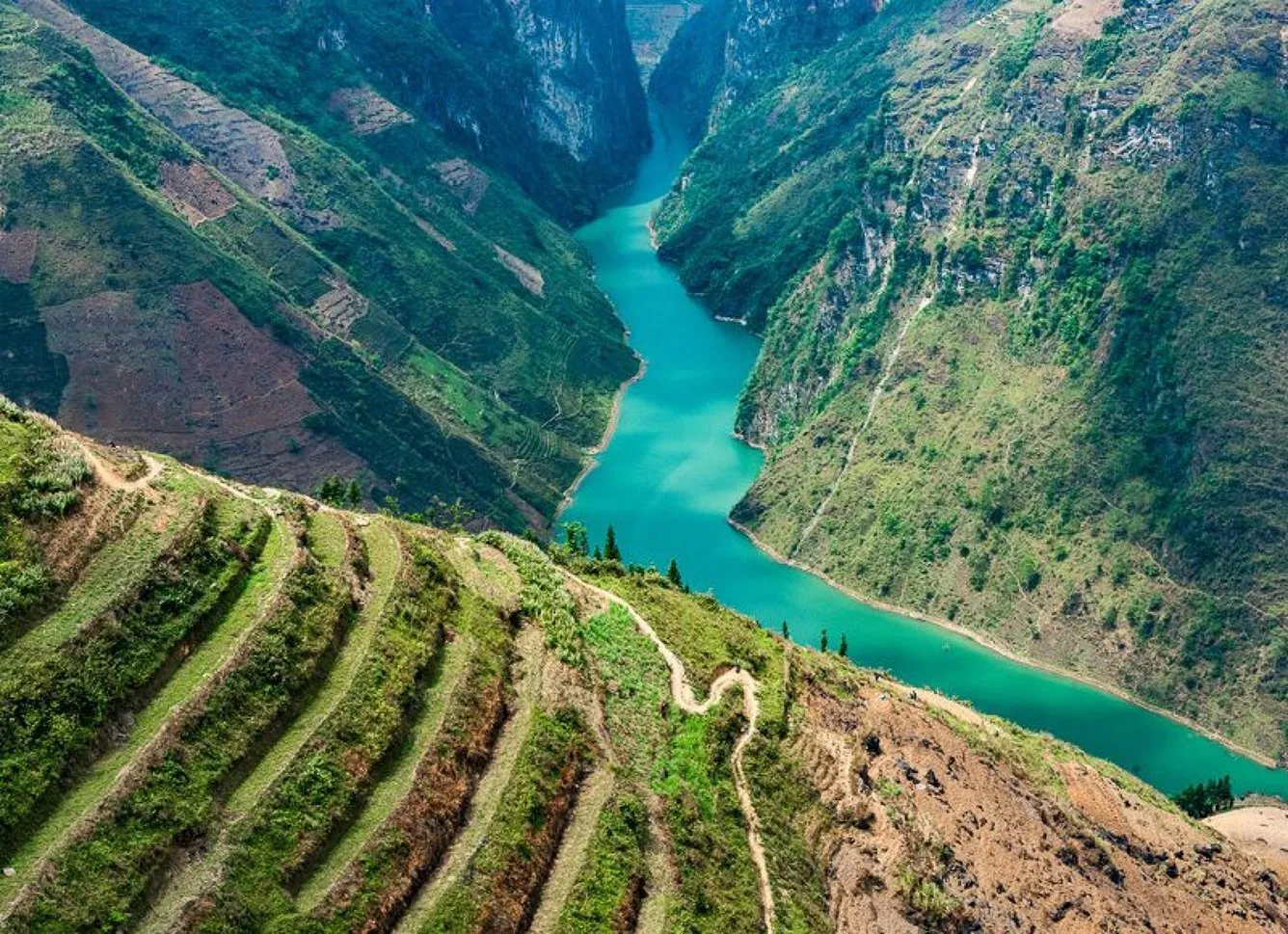
Ma Pi Leng Pass is approximately 20 kilometers long and connects Dong Van Town and Meo Vac Town in Ha Giang Province. Along with three other notable passes in Vietnam, O Quy Ho Pass (Lai Chau – Lao Cai), Khau Pha Pass (former Yen Bai, now Lao Cai), Pha Din Pass (Son La-Dien Bien), it is counted among the “four great passes” of northern Vietnam. Standing at the top of Ma Pi Leng Pass, you will be treated to breathtaking views of limestone mountains, green forests, and the romantic Nho Que River, which is turquoise green all year. Visitors can take a motorbike or car tour through the region to see the breathtaking scenery, including the Ma Pi Leng Pass, the Dong Van Karst Plateau Geopark, and the Lung Cu Flag Tower. You can also enjoy the landscape by taking a boat ride or kayaking down the Nho Que River.

2.1.6. Try Ha Giang cuisine
When it comes to things to do Ha Giang, enjoying Ha Giang cuisine is something you should not miss. Ha Giang cuisine is a unique and diverse culinary tradition that reflects the region’s rich cultural heritage and natural resources. Ha Giang cuisine is heavily influenced by the local ethnic minority communities, so it has a special taste that you only find in Ha Giang. There are a lot of delicacies in Ha Giang including thang co, sticky rice cooked in bamboo pipes, five-color glutinous rice, Tam Giac Mach cake, and so on. Visitors can easily find and try these dishes at traditional markets or local restaurants, and all of which are unique and delicious.

2.2. Other interesting things to do Ha Giang
2.2.1. Drive the Ha Giang loop
Everything on the list of the finest things to do Ha Giang can be summed up in one word: Ha Giang Loop. The Ha Giang loop is a three to five-day journey that begins and ends in Ha Giang City. Every day, you visit a different location, and the scenery along the way between your destinations improves.
You will drive across high passes, explore sceneries with Southeast Asia’s most stunning mountains, and learn about the unique traditions of the local minorities. Many backpackers ride it by motorbike, but the roads are steep, narrow and winding, so for families, older travellers and anyone who simply wants to enjoy the views, we recommend doing the Ha Giang loop by private car with an experienced local driver and guide. You can stop at every viewpoint, travel in comfort whatever the weather, and still add short walks into the villages along the way.
2.2.2. Homestay experience
If you are planning to come to Ha Giang, instead of choosing a hotel or motel, one of the things to do Ha Giang for you is to experience a homestay. Staying overnight in a homestay is another excellent method to immerse yourself in the local culture. These homestays are frequently run by a member of an ethnic minority household. Facilities vary a lot: some homestays are very simple, while others now offer private rooms with en-suite bathrooms, so choose carefully, or combine one homestay night with a more comfortable lodge for the rest of the trip. It is highly advised that you have a family supper when you enjoy delicious local foods with all of the other visitors and the host.

2.2.3. Explore local minority villages
Exploring local minority villages in Ha Giang is one of the unique and unforgettable things to do Ha Giang. Ha Giang is home to several ethnic minority communities such as the Hmong, Dao, Lo Lo, Giay, and Tay, with their own distinct culture, traditions, and way of life. Walking through the villages, visitors can admire the traditional architecture of the wooden stilt houses and observe the locals engaged in activities such as weaving, farming, and raising livestock. Exploring these minority villages provides a deeper understanding of the region’s cultural heritage and offers a chance to connect with the locals and their way of life.
3. Best time to visit Ha Giang
The best time to visit Ha Giang is from September to November or from March to May. During these months, the weather is mild and dry, with clear skies and pleasant temperatures, making it ideal for outdoor activities such as hiking and sightseeing.

In September and October, the rice terraces in Ha Giang turn golden yellow, providing a stunning backdrop for photography enthusiasts. From late October to November the pink buckwheat flowers bloom on the rocky plateau, the season of the annual buckwheat flower festival.
In March and April, the hills and valleys of Ha Giang come alive with blooming flowers, including peach blossoms, plum blossoms, and cherry blossoms. The weather is also mild and comfortable, making it an excellent time for outdoor activities.
Conclusion
Ha Giang is an incredible destination for tourists seeking an authentic experience in Vietnam. From exploring local minority villages and indulging in the delicious cuisine to hiking through stunning mountain landscapes and immersing oneself in the region’s rich cultural heritage, there are many things to do Ha Giang. If you are preparing for a trip to Ha Giang, Metta Voyage hopes that this article can help you. Visiting our website to know more interesting information about beautiful destinations and wonderful tourist experiences.
Contact us
Website: mettavoyage.com
Email: [email protected]
Hotline 24/7: + 84 812 247 572