
1. Overview of Ha Giang
Ha Giang is an area in the high mountain region in the northernmost part of Vietnam, bordered to the north by China, to the east by Cao Bang and to the west by Lao Cai (which now includes former Yen Bai). Since July 2025 the former Ha Giang province has been part of Tuyen Quang province.
What’s new for 2027
- Since 1 July 2025 the former Ha Giang province has been merged into Tuyen Quang province, and Vietnam no longer has districts. “Ha Giang” is still the name used for the region, the loop and its seasons; place names below keep the former district names, and map apps may show the new commune.
- Festival dates follow the lunar calendar and local organisers, so they move each year. Ask Metta Voyage for this year’s dates, or see our Ha Giang tours.
Ha Giang is an attractive tourist destination, attracting a large number of tourists with its magnificent and beautiful natural scenery, along with the peace and simplicity of the people here. There are quite a few ethnic minorities living here, of which the most are Mong, Tay, Dao, and Vietnamese, the few are Nung, Lo Lo, Pu Peo, etc.

Ha Giang is located in the tropical monsoon climate, divided into four distinct seasons: spring, summer, autumn, and winter. The average temperature in Ha Giang is 21.5°C to 24°C, with the temperature range often fluctuating above 10°C. Conditions vary a lot with altitude: the lower valleys can be very hot and humid in June and July, while on the high plateau around Dong Van and Meo Vac winter nights can fall close to freezing.
2. The best time to visit Ha Giang with great weather
2.1. Spring (January to March): beautiful weather in Ha Giang
Spring is considered the most beautiful time of the year in Ha Giang because the climate at this time is very pleasant: cool, no rain, clear blue skies, airy. The average temperature here ranges from 20 0C – 28 0C during the day, and at night the temperature drops to about 10 0C – 15 0C.
Spring can be the most ideal time to travel to Ha Giang, especially in March. Ha Giang puts on the vibrant colors of peach blossom forests, white plum blossoms, and valleys full of colors. fresh, passionate flowers.

2.2. Summer (April to June)
In the summer, the land of Ha Giang is covered with the characteristic green color of the highlands. The weather in April at this time is quite cool, but still the best time to visit this place with a pleasant temperature (17 0C – 20 0C).
In May and June, the weather starts to get hotter, and the temperature during the day can be over 30°C – 37°C. You will admire the dreamy, beautiful scenery of Ha Giang with its terraced fields in the pouring season and water overflowing on beautiful fields preparing for a new crop here.

2.3. Autumn (July to October): Ideal weather to travel to Ha Giang, the season of ripe rice fields
In autumn, the weather in Ha Giang is quite mild, neither too hot nor too cold; the temperature ranges from 19 0C – 32 0C. August-September is the ripe rice season in Ha Giang; the rice fields at this time gradually turn from green to yellow, and this is the time when people in the mountains of Ha Giang are busy harvesting ripe rice.
Coming here at this time, you will have the opportunity to learn about the life of farmers in the days of the harvest.

2.4. Winter (October to December): dry season, beautiful weather, buckwheat flower season in full bloom.
Winter in Ha Giang is quite special, and due to the characteristics of the winter terrain in each place in Ha Giang, the length of the winter will be different. The high Dong Van–Meo Vac plateau has the longest and coldest winter, while lower areas such as Yen Minh have a shorter, milder cold season.
The temperature in winter in Ha Giang is usually very low, ranging from 8 0C – 13 0C. In December, some areas here, such as Dong Van and Meo Vac, sometimes get snow and freeze. The temperature can be below 0 °C or above 5 °C.
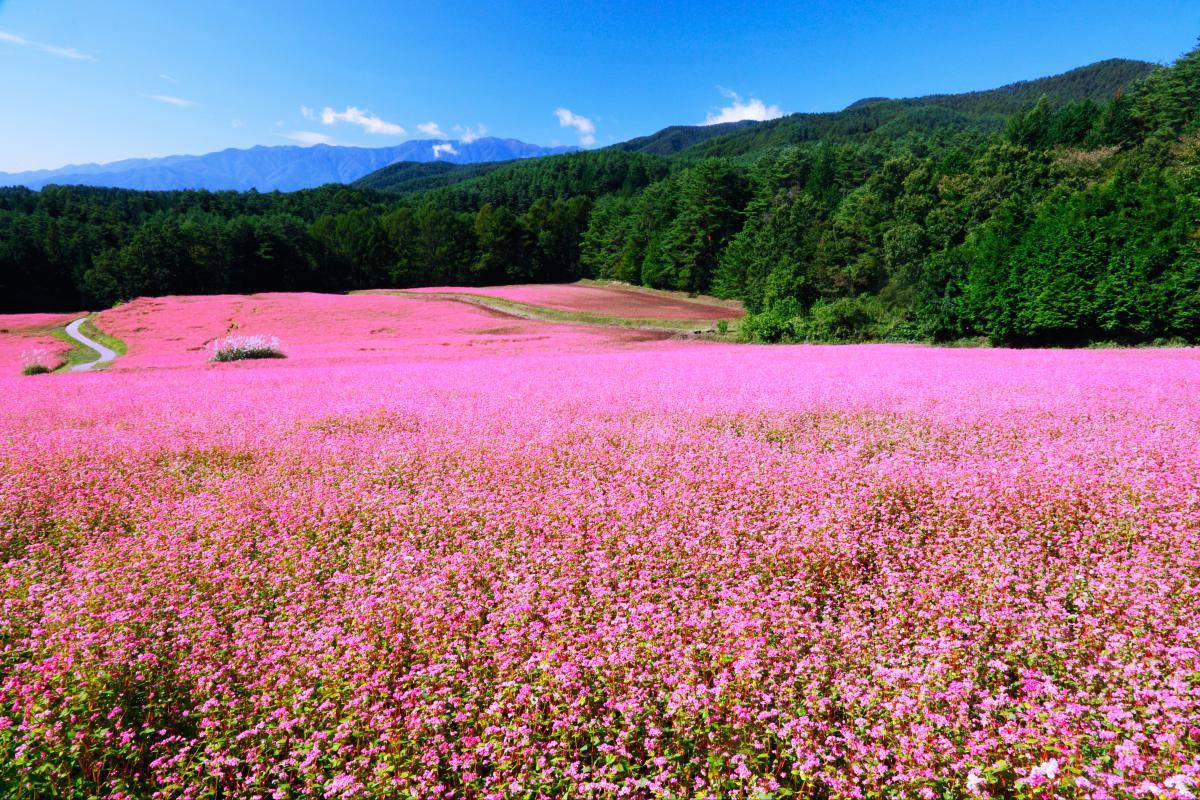
The most beautiful time to come to Ha Giang in winter is October and November, when the fields of purple and pink buckwheat flowers begin to bloom throughout the plateau. In December, Ha Giang put on a new shirt with the brilliant yellow color of mustard flowers, creating a shimmering scene in the cold winter.

Ha Giang has countless famous tourist destinations, with each season bringing a different beauty that gives you many different emotions. However, the ideal time for tourists to visit and explore Ha Giang falls between mid-August and March next year.
Planning a trip? Get a private, tailor-made itinerary within 24 hours: Vietnam luxury tour, 15 days →
3. The best time to visit Ha Giang, the season of traditional festivals
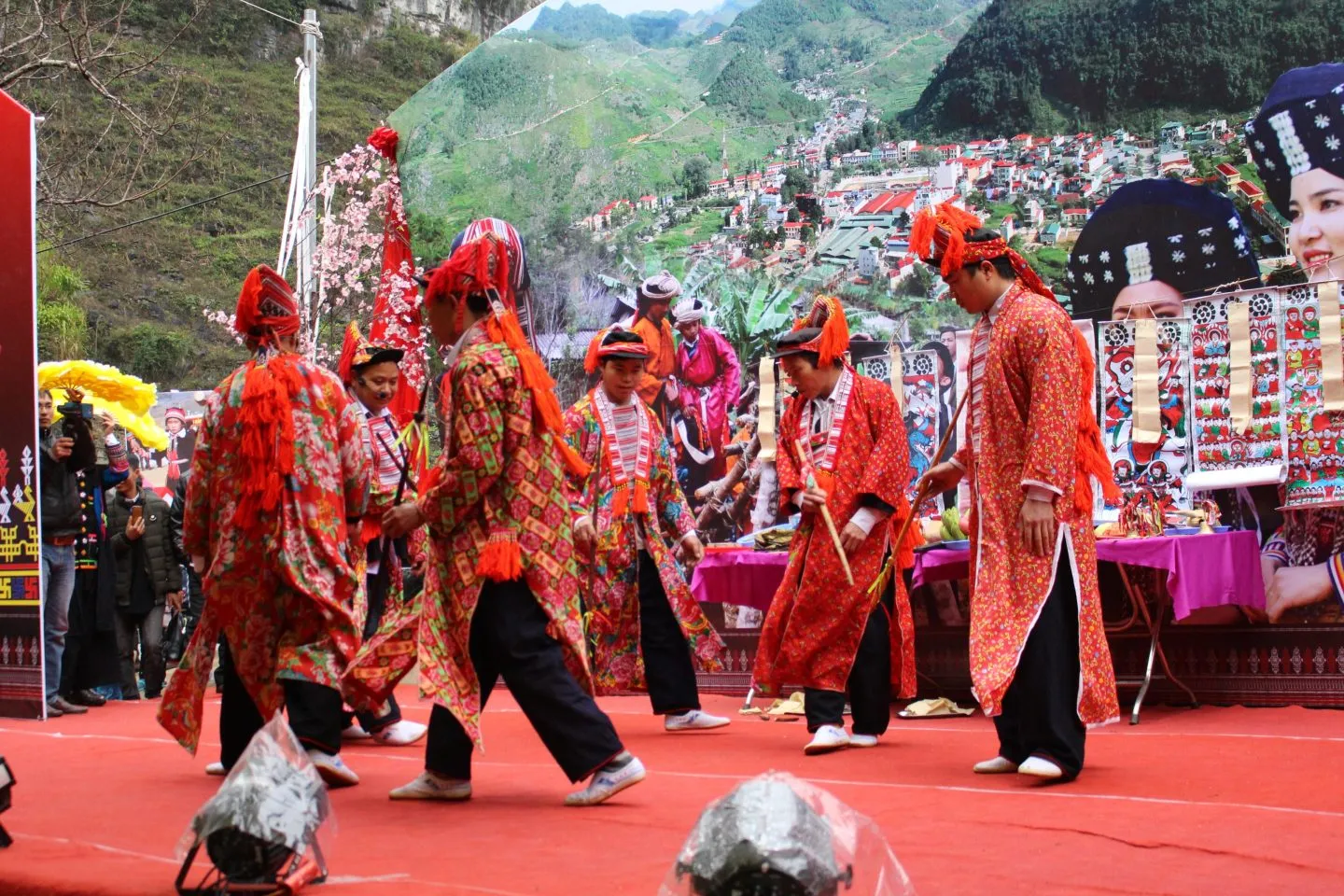
The bustling and vibrant Ha Giang festival is always a plus point to attract tourists. At the Ha Giang festivals, you can not only participate in interesting games and activities. You can also learn about the fascinating traditional culture.
3.1. Buckwheat Flower Festival, the most popular festival among tourists in Ha Giang
The Buckwheat Flower Festival is usually held in November, centred on Dong Van. The organisers set the exact dates and programme each year, so check before you plan around it.
3.2. Fire Dance Festival
The fire dance festival, also known as the fireball festival, is a festival of the Pa Then ethnic group in Ha Giang. This festival is held on the 16th day of the 10th lunar month every year.

3.3. Long Tong Festival
The Long Tong Festival is a famous festival of the Tay ethnic group. The Long Tong traditional folk festival is held in the first lunar month, during the Tet season (usually late January or February on the Western calendar; each village sets its own day). In addition, the festival also has many other games such as a plowing competition, tug of war, pushing sticks, etc.
3.4. Cau Trang Festival – famous festival in Ha Giang
Cau Trang Festival is one of the festivals in Ha Giang, with the cultural beauty of the Tay people. The Moon Festival is usually held on the 15th day of the 8th lunar month (Mid-Autumn Festival). You will also enjoy the traditional cuisine of the Tay ethnic group along with the folk songs or folk games of the Cau Trang festival.

3.5. Khau Vai Love Market Festival
The Khau Vai Love Market Festival is usually held on the 27th day of the third lunar month every year. Coming to this festival, you will be immersed in a jubilant and bustling space. In addition, you can also hear a couple of love confession songs by Hmong, Nung, Giay, etc. 
3.6. Gau Tao Festival
Gau Tao Festival is one of the most important and biggest festivals of the H’Mong ethnic group. Gau Tao Festival is held in the first lunar month, within the first two weeks after Tet (late January or February on the Western calendar). The festival also has a lot of activities and games taking place in the festival section such as spinning, archery, horse jumping, flute dancing, bird’s nesting, etc.

3.7. Cap Sac Festival
The Cap Sac Ceremony is also known as the Lap Tinh Ceremony. This is a traditional male-only ritual of Daoism. This long-standing Sac festival is usually held at the end of the year, around November and December, in Ha Giang. Sometimes it can be moved up a bit to January.
4. The best time to visit Ha Giang to save money
Ha Giang’s peak season is from March to May or from September to November. At this time, the city will be crowded with tourists, so the cost of meals, hotels, restaurants, etc will greatly increase. So, if you want to save money on reservations and meals, you should limit going during this time!
5. Note avoid traveling to Ha Giang in the rainy season
Traveling in the rainy season can make it difficult for you to travel and enjoy the beautiful scenery. Besides, you still have many advantages when going at this time, such as: cheap, peaceful, etc. Therefore, if you want to go during this time, you must note some information below:
You need to regularly monitor the weather forecast information so that you can adjust your schedule to avoid going at the time of the worst weather.
Please bring your personal raincoat, compact umbrella, and shoe bag in case it rains unexpectedly.
Bring a jacket or scarf, as they will help keep you warm.
The rainy season is a favorable time for insects such as flies and mosquitoes to proliferate, so remember to bring insect spray to avoid insect bites that cause disease.
6. Interesting experiences in Ha Giang
6.1. Discovering the Dong Van Stone Plateau
Dong Van rock plateau is located at an average altitude of 1000–1600 m above sea level, spreading through the four former districts of Quan Ba, Yen Minh, Meo Vac, and Dong Van. If you stand on a high mountain top and zoom your eyes into the distance, you will see a vast and undulating mountainous area, creating a beautiful natural picture.
The Dong Van stone plateau is likened to a “gray paradise” in the northernmost mountainous region of the country with its wild, poetic, majestic beauty and unique ethnic cultural features of the H’Mong, Lo Lo, Tay people, etc.

6.2. Conquering Ma Pi Leng Pass
Ma Pi Leng Pass Ha Giang is known as one of the four great mountain passes of Vietnam. Ma Pi Leng Pass has a length of about 20 km and is located at an altitude of about 1200m above sea level. Ma Pi Leng acts as the main road connecting Ha Giang city, Dong Van, and Meo Vac town. Ma Pi Leng Pass is located on Highway 4C, in the former Pa Vi and Pai Lung communes of Meo Vac district. From the top of the pass, you can see the whole majestic scenery of the jade-green Nho Que river winding around the mountains.

6.3. Checking in Hoang Su Phi terraced fields
Hoang Su Phi terraced fields are located in six communes: Ban Luoc, San Sa Ho, Ban Phung, Ho Thau, Nam Ty, and Thong Nguyen. Hoang Su Phi is mentioned as having the most beautiful terraced fields in Vietnam.
There are 3 villages with the most famous terraced fields in Hoang Su Phi: Nam Ty (Thong Nguyen village), Luoc village, and the furthest village, Phung village. Hoang Su Phi terraced fields are both a beautiful tourist attraction in Ha Giang and home to 12 ethnic minorities, typically the Dao, the Nung, and the La Chi.

6.4. Exploring Quan Ba Heaven Gate and Quan Ba Twin Mountain
Stopping at Quan Ba Heaven Gate at a position 1,500m above sea level, visitors can fully admire Tam Son town; in the distance are the magically beautiful Quan Ba twin mountains. Quan Ba Heaven Gate is a narrow slit between two mountain peaks; this is the beginning of the Happiness Road and the gateway to the Dong Van Rock Plateau.
Quan Ba Twin Mountain is located on Highway 4C in Quan Ba district, about 40 km from Ha Giang town. Quan Ba Twin Mountain is an excellent work of art that nature bestows. Two unique-shaped mountains emerging between the overlapping rocky mountains and terraced fields make people even more surprised.

6.5. Conquering the Northernmost Point of Vietnam: Lung Cu Flagpole
Lung Cu flagpole is located on the top of Dragon Mountain (1,470m above sea level), considered the northernmost sacred landmark of the country, located in Lung Cu commune (former Dong Van district). To conquer Lung Cu flagpole, you have to overcome 839 steps and have to climb 140 more narrow spiral stairs to touch the national flag, officially standing at the northernmost point of Vietnam.

6.6. Seeing the buckwheat flowers
Buckwheat flower season in Ha Giang is from October to December. The blooming season lasts for about 3 months, but the flower color will gradually change over time from white to light pink, dark pink, and finally purple-red, then wither. If you want to see flowers when they are bright red and blooming, choose Ha Giang in November.
The following places are most suitable for you to enjoy the buckwheat flower fields and have great check-in photos, such as: Thach Son Than, the foot of Ma Pi Leng pass, Sung La, Lung Cu, Pho Bang, Dong Van Plateau, etc.

7. Conclusion
With four seasons (spring, summer, autumn, and winter), each season or month in Ha Giang has a distinct beauty. You can visit Ha Giang at any time of the year because Ha Giang always has a unique charm that attracts tourists. Metta Voyage hopes you will have the safest and most memorable Ha Giang discovery journey. If you have any questions about the schedule, do not hesitate to contact us; we are always ready to answer all your questions so you can have a great trip.
Contact us
Website: www.mettavoyage.com
Email: [email protected]
Hotline 24/7: + 84 812 247 572
Save this guide
Keep it for later, or print it now
We'll email you this guide and a few planning tips from our travel designers.
· Privacy
0 Comment