
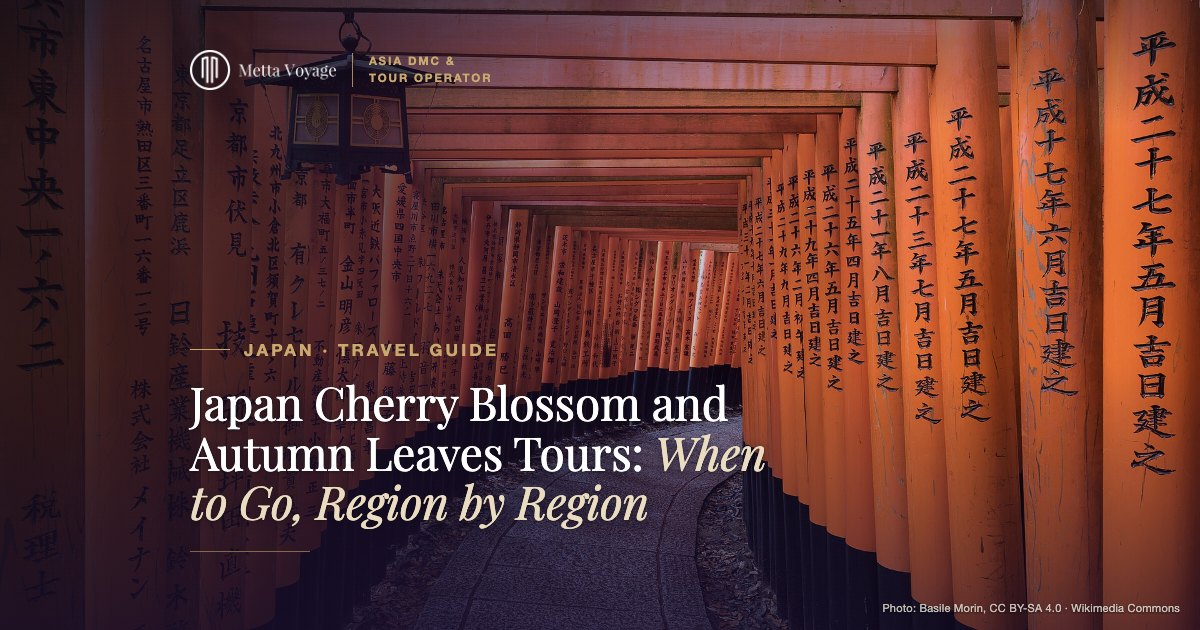
Japan’s two great seasons are short and move across the country like a wave. Cherry blossoms travel north from the far south in March to Hokkaido in May, and autumn colors travel the other way, from the northern mountains in late September down to Kyoto in late November. Timing a trip well means choosing the right region for your dates, not just the right month. This guide explains when each season usually peaks, which routes we recommend, and how to plan with the weather in mind.
When the seasons usually peak, region by region
| Region | Cherry blossom (usual peak) | Autumn leaves (usual peak) |
|---|---|---|
| Tokyo | Last week of March to early April | Late November to early December |
| Kyoto, Nara and Osaka | Late March to early April | Mid-November to early December |
| Mount Fuji area (Lake Kawaguchiko, Hakone) | Early to mid-April | Early to mid-November |
| Japanese Alps (Takayama, Shirakawa-go) | Mid to late April | Late October to early November |
| Kanazawa | Early April | Early to mid-November |
| Northern Japan and Hokkaido | Late April to early May | Late September to October |
These are typical windows, not guarantees. Blossoms are at their best for only about a week in any one place, and a warm or cold spell can move them by several days. Forecasts are published from early in the year and refined as the season approaches; we follow them closely and fine-tune your days on the ground.
Cherry blossom season: how we plan a spring trip
A cherry blossom trip works best when it visits several places that bloom at slightly different times. Our Japan Cherry Blossom private tour runs 11 days and starts in late March, beginning in Tokyo and moving to the Fuji area, where trees open a little later, before four nights in Kyoto and a finale at Himeji Castle.
| Day | Places | Overnight | Hotel class |
|---|---|---|---|
| 1 | Arrive in Tokyo | Tokyo | 4★ (5★ on request) |
| 2 | Ueno Park, Senso-ji in Asakusa, the Sumida River | Tokyo | 4★ (5★ on request) |
| 3 | Shinjuku Gyoen, Meiji Shrine, Chidorigafuchi moat | Tokyo | 4★ (5★ on request) |
| 4 | Lake Kawaguchiko and the Chureito Pagoda | Lake Kawaguchiko | Ryokan with hot-spring baths, 4★ level |
| 5 | Shinkansen to Kyoto; Gion by night | Kyoto | 4★ (5★ on request) |
| 6 | Ginkaku-ji, the Philosopher’s Path, Nanzen-ji, Maruyama Park | Kyoto | 4★ (5★ on request) |
| 7 | Arashiyama, Tenryu-ji and the Golden Pavilion | Kyoto | 4★ (5★ on request) |
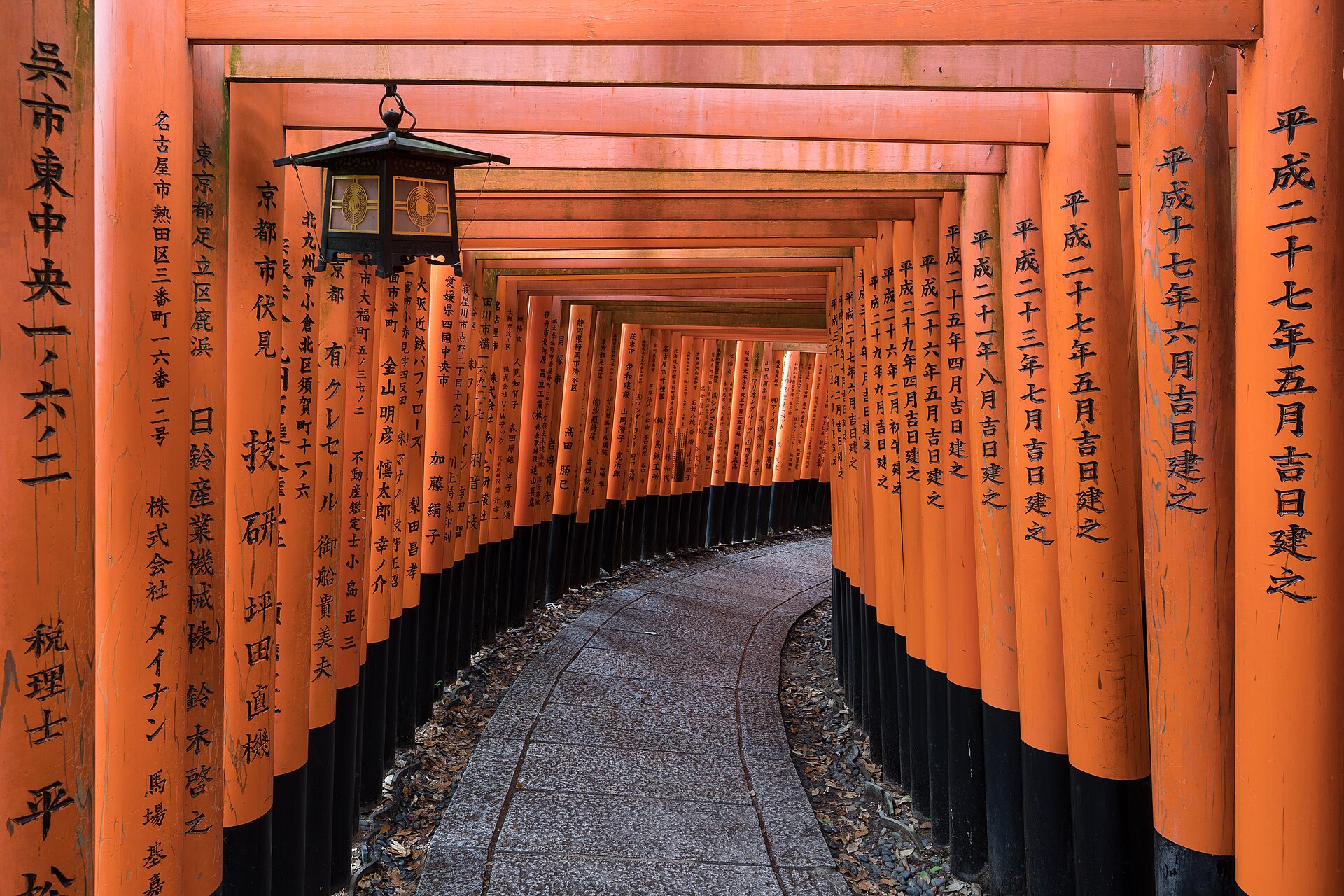
| 8 | Fushimi Inari, Daigo-ji and Kiyomizu-dera | Kyoto | 4★ (5★ on request) |
| 9 | Nara Park and Todai-ji; on to Osaka | Osaka | 4★ (5★ on request) |
| 10 | Himeji Castle and Osaka Castle | Osaka | 4★ (5★ on request) |
| 11 | Free time and departure from Kansai | — | — |
Highlights include Ueno Park, where more than a thousand cherry trees line the main avenue; the Chureito Pagoda above Lake Kawaguchiko, about 400 steps up, with Mount Fuji behind it on a clear morning; the canal-side Philosopher’s Path in Kyoto; and Daigo-ji, where the ruler Toyotomi Hideyoshi held a famous blossom-viewing party. Himeji Castle, known as the White Heron, is surrounded by around a thousand cherry trees.
Autumn leaves season: how we plan an autumn trip
Autumn color starts high in the mountains and moves down to the cities, so the best route follows it. Our Japan in Autumn private tour runs 11 days with departures in early to mid-November, heading from Tokyo into the Alps at Takayama and Shirakawa-go, across to Kanazawa, and down to Kyoto for the peak.
| Day | Places | Overnight | Hotel class |
|---|---|---|---|
| 1 | Arrive in Tokyo | Tokyo | 4★ (5★ on request) |
| 2 | Meiji Shrine, the Jingu Gaien ginkgo avenue, Senso-ji | Tokyo | 4★ (5★ on request) |
| 3 | Shinkansen and Hida limited express to Takayama | Takayama | Ryokan or 4★ hotel with hot-spring baths |
| 4 | Takayama morning market, Takayama Jinya, Hida Folk Village | Takayama | Ryokan or 4★ hotel with hot-spring baths |
| 5 | Shirakawa-go farmhouses; on to Kanazawa | Kanazawa | 4★ (5★ on request) |
| 6 | Kenroku-en garden, Kanazawa Castle; train to Kyoto | Kyoto | 4★ (5★ on request) |
| 7 | Tofuku-ji and Fushimi Inari | Kyoto | 4★ (5★ on request) |
| 8 | Philosopher’s Path, Nanzen-ji, Eikan-do, Kiyomizu-dera | Kyoto | 4★ (5★ on request) |
| 9 | Arashiyama, Tenryu-ji and the Golden Pavilion | Kyoto | 4★ (5★ on request) |
| 10 | Nara Park, Todai-ji and Kasuga Taisha; on to Osaka | Osaka | 4★ (5★ on request) |
| 11 | Free time and departure from Kansai | — | — |
In Kyoto, Tofuku-ji’s wooden Tsutenkyo bridge looks over a valley filled with maples, and Eikan-do is known simply as the temple of autumn leaves. In Takayama and Shirakawa-go, the steep thatched roofs of the gassho-zukuri farmhouses stand against hills of red and gold, while Kenroku-en in Kanazawa, one of Japan’s three great gardens, glows in color in early November.
Spring or autumn: which should you choose?
| Cherry blossom (late March – mid-April) | Autumn leaves (late October – early December) | |
|---|---|---|
| Season length | Short: about a week at peak in each place | Longer: several weeks as color moves south |
| Weather | Mild days, cool evenings, some showers | Crisp, mostly dry, cold mornings in the Alps |
| Crowds and prices | Japan’s busiest period; hotel surcharges | Busy in Kyoto at peak weekends; surcharges |
| Flexibility | Dates matter more; build in a buffer | Easier to plan months in advance |
If you can only plan far ahead and want the most reliable color, autumn is easier. If the blossoms are a lifelong wish, spring is unforgettable, but plan with some flexibility.
Practical tips for blossom and foliage trips
- Book early: hotels and ryokan fill early in both seasons, so we recommend booking six to nine months ahead.
- Start early in the day: famous spots such as Fushimi Inari, Arashiyama and Kiyomizu-dera are calm at opening time and crowded by late morning.
- Keep Kyoto long: four nights in Kyoto gives you room to move the best garden to the best day.
- Evening illuminations: many Kyoto temples light up their gardens at night in both seasons; tickets are bought separately on the day.
- Trains: Shinkansen and limited express tickets are quoted separately, and we reserve seats as early as booking opens.
- Visa: check current visa rules for your passport before booking flights.
Combining a seasonal Japan trip with Vietnam
Both seasons pair well with Vietnam. In late March and April, northern and central Vietnam are mild and dry; in November, Hanoi and Halong Bay are at their best. Osaka has direct flights to Hanoi, so you can finish in Japan or start there, as on our Japan and Vietnam tour; read more in Japan and Vietnam in one trip. For a longer stay in Southeast Asia, The Best of Vietnam and Cambodia in 14 days follows on well. Outside the two peak seasons, our Japan Golden Route guide and the Japan destination page show year-round options.
FAQ
When is cherry blossom season in Japan?
In Tokyo and Kyoto the blossoms usually open in the last week of March and stay at their best for about a week, often into the first days of April. Further north and in the mountains they bloom later, into May in Hokkaido.
When is the best time to see autumn leaves in Kyoto?
Usually from mid-November to early December. Takayama and Shirakawa-go peak earlier, from late October to early November.
What happens if the blossoms come early or late?
Your guide adjusts the order of the days to follow the best trees, and a route through several regions gives you more than one chance. We cannot guarantee the bloom, but we plan for flexibility.
How far ahead should we book?
Six to nine months ahead for both seasons, especially for ryokan nights and well-located hotels in Kyoto.
How much does a cherry blossom or autumn tour cost?
Peak seasons carry hotel surcharges, and prices depend on dates, hotels and group size. See the tour page for the current from-price, confirmed in your tailor-made quote.
Tell us whether you dream of blossoms or maples, and your possible dates, and we will suggest the best window and a private itinerary, usually within 24 hours.
Call us: US +1 929 491 2828 · UK +44 7520 660929
Last updated: 26 October 2026
Photo: Kentagon, CC BY-SA 4.0, via Wikimedia Commons.