
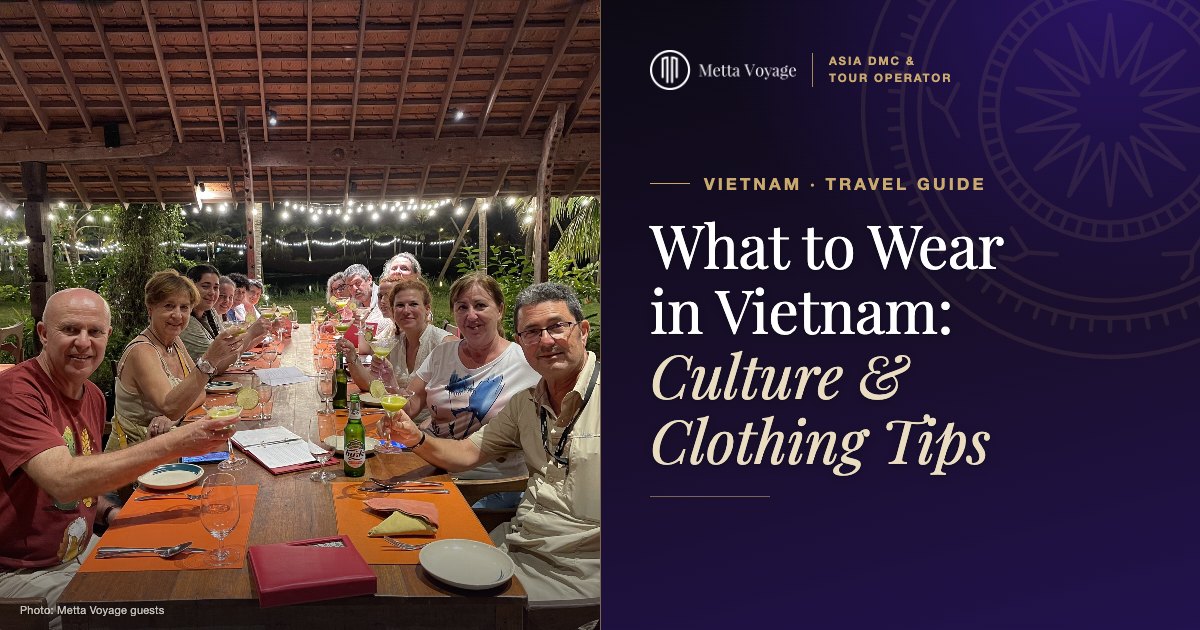
What to wear in Vietnam by season and region
Vietnam stretches about 1,600 km from north to south, so the right wardrobe depends on where you are and when. Hanoi and the north have a cool, damp winter and a hot, humid summer. The south stays warm all year, with a drier half and a wetter half. The central coast (Hue, Da Nang, Hoi An) sits between the two and has its rainy spell late in the year. Figures below are broad averages from the Vietnam National Authority of Tourism’s weather guide, checked on 15 November 2026; look at a forecast a week before you fly.
| Region | Climate in short | What to pack |
|---|---|---|
| North (Hanoi, Ha Long, Sapa) | Cool and often grey from about November to March (January averages around 17°C in Hanoi, colder in the mountains); hot and humid in summer, with highs above 30°C | Winter: a light down or windproof jacket, a sweater, long trousers, closed shoes. Summer: loose cotton or linen, a rain jacket |
| Central coast (Hue, Da Nang, Hoi An) | Warm to hot and sunny from roughly March to August; cooler, cloudier and wetter from roughly September to February | Light layers, a rain jacket, quick-dry clothes, sandals that handle wet pavements |
| South (Ho Chi Minh City, Mekong Delta, Phu Quoc) | Hot all year (about 26-35°C); dry season roughly November to April, rainy season roughly May to October with short, heavy showers | Breathable cotton, a hat, sunscreen, a compact umbrella or poncho |
If your trip crosses regions, think in layers rather than in outfits: a base of light, quick-drying clothes plus one warm layer and one rain layer covers almost every itinerary. Hotels and laundries in every city can wash clothes within a day, so there is no need to pack for the whole trip.
Vietnam dress code: temples, pagodas and the mausoleum
Vietnam has no dress law for visitors, and in cities, restaurants and beaches you can wear what is comfortable. The rules that matter apply to religious and official sites.
| Where | What to wear |
|---|---|
| Pagodas, temples, communal houses | Cover shoulders and knees. Choose plain, muted colours and avoid slogans, see-through fabric and short shorts. Carry a light scarf or sarong to cover up quickly. You will often take off your shoes before entering the main hall, so wear slip-on shoes. |
| Ho Chi Minh Mausoleum, Hanoi | Shoulders and knees covered; short shorts, mini-skirts and sleeveless tops are not allowed. Hats off inside, silence, and no photography inside the mausoleum. Opening hours and the annual maintenance closure change from year to year, so confirm before you plan Hanoi days around it. |
| Family homes, village visits | Modest, relaxed clothing. You will usually be asked to remove shoes at the door. |
| Restaurants, hotels, city sightseeing | Smart-casual at most. Shorts and T-shirts are normal in the heat. Fine-dining rooms and rooftop bars may ask for closed shoes in the evening. |
| Beaches and hotel pools | Swimwear is fine on the sand and at the pool; put a cover-up on when you walk into town or a restaurant. |
Source for the mausoleum rules and hours: Vietnam tourism guide to the Ho Chi Minh Mausoleum (checked on 15 November 2026). Published sources differ on the exact closure months, which is why we suggest confirming with your guide or hotel a few days before you go.
What not to wear in Vietnam
- Short shorts, crop tops and sleeveless tops at religious or official sites. This is the one rule that actually gets people turned away.
- Heavy jeans for trekking or monsoon days. Denim stays wet and cold; quick-dry trousers are far more comfortable on the trails around Sapa, Mai Chau or Pu Luong.
- Brand-new white shoes or delicate fabrics. Pavements, motorbike splashes and temple courtyards are dusty or muddy depending on the season.
- Valuable jewellery. It adds nothing to a trip and is better left in the hotel safe.
Is red fine to wear? Yes. Red is a lucky colour in Vietnam, especially around Tet, so there is no taboo for visitors.
Plan your Vietnam trip in 1 minute
Pick your month to see the weather by region, or estimate your budget — then get a private itinerary from our Hanoi team.
Typical seasonal patterns; weather varies year to year. Our team checks your exact dates when we prepare your itinerary.
"From" prices published on our Vietnam tour cost guide: per person per day, 2 travellers sharing, private guide & driver, hotels, listed activities. International flights, e-visa, insurance and tips not included. Final price is confirmed in your written quote.
What do people wear in Vietnam?
Day to day, Vietnamese people dress practically for the heat: light trousers or skirts, T-shirts and shirts, and many women cover their arms and face against the sun when riding scooters. The ao dai, the long split tunic over trousers, is worn for Tet, weddings and formal events; you will see it most around the lunar new year. Tailors in Hoi An and Hanoi make ao dai and other clothes to measure, which some visitors enjoy as a one-day experience; ask your guide for a tailor your hotel trusts and agree the price before the fitting.
Clothes for activities
Hiking and village walks
Quick-dry trousers or shorts, a breathable T-shirt, a light rain jacket and shoes with grip are enough for most day hikes in the northern mountains. Add a warm layer from November to March, when the highlands are cold in the early morning and evening. See our hiking and trekking tours for routes we can arrange with a private guide.
Beach and boat days
Swimwear, a rash vest or light shirt, a wide-brimmed hat and reef-safe sunscreen. On an overnight Ha Long Bay cruise, evenings on deck can be cool from late autumn to spring, so bring a jumper.
City days and street food
Breathable cotton or linen, comfortable walking sandals or trainers, and a small bag worn across the body. Pavements are uneven and often used for parking and stalls.
A simple packing list for a 10-14 day trip
- 4-5 light tops and 2-3 pairs of trousers or skirts that cover the knee
- 1 pair of shorts and swimwear
- 1 light scarf or sarong for temples and air-conditioned vehicles
- 1 rain jacket or poncho, 1 warm layer (essential for the north from November to March)
- Slip-on shoes plus walking shoes; sandals for the beach
- Hat, sunglasses, sunscreen, insect repellent
Clothes are good value in Vietnam, so a forgotten item is easy to replace. Plan your itinerary and wardrobe together: browse our Vietnam private tours, look at Hanoi tours and Hoi An tours, or read about family tours if you are packing for children. As a budget guide, our private tours in Vietnam start from about 140 USD per guest per day for 2 guests (4-star hotels, private car and guide); your personal quote gives the real price.
Frequently asked questions
Can I wear shorts in Vietnam?
Yes, in cities, on beaches and at most attractions. Avoid short shorts at pagodas, temples and the Ho Chi Minh Mausoleum, where shoulders and knees should be covered.
What should I wear in Hanoi in winter?
Layers: a light down or windproof jacket, a sweater and long trousers. From about November to March Hanoi is cool and often damp, and mountain areas such as Sapa are colder.
What is the dress code for temples in Vietnam?
Cover shoulders and knees, avoid see-through or very tight clothes and bold slogans, and wear shoes that slip off easily because you may remove them at the hall entrance.
Is it OK to wear red in Vietnam?
Yes. Red is considered lucky, especially at Tet, so visitors can wear it freely.
Do I need to dress up for dinner?
Not usually. Smart-casual is enough for most restaurants and hotels; a few upscale rooms ask for closed shoes in the evening.
Ask about this trip on WhatsApp or send us your dates and group size.
The Metta Voyage team · Updated 15 November 2026