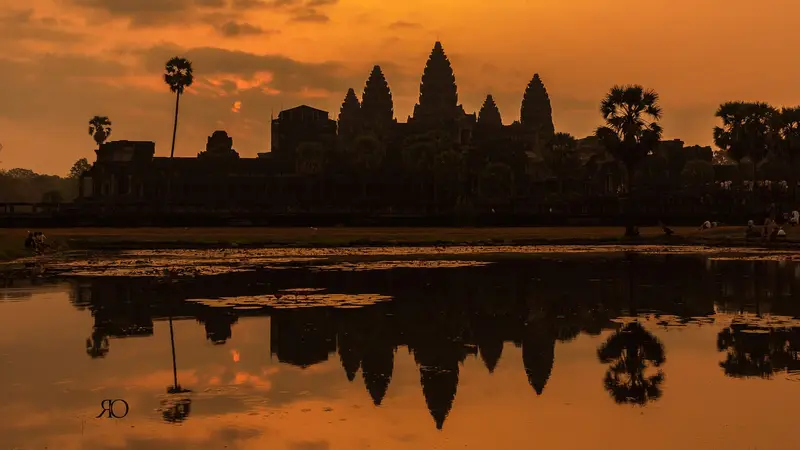

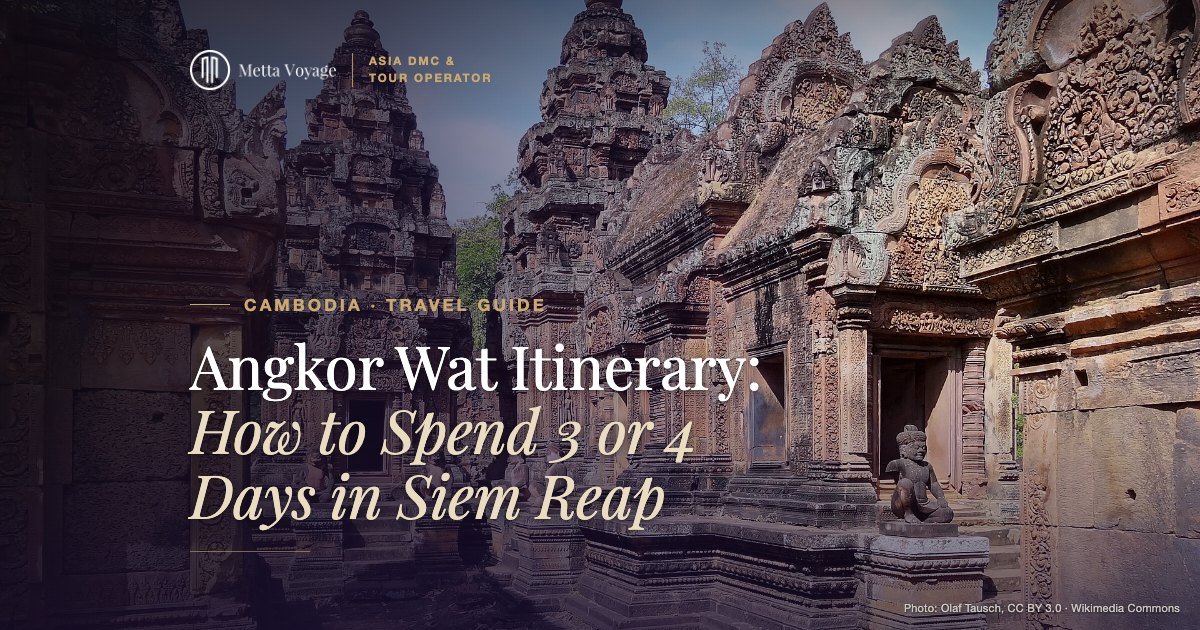
Angkor is not a single temple but a whole ancient city spread over hundreds of square kilometres north of Siem Reap. Most visitors arrive with one picture in mind, the five towers of Angkor Wat at sunrise, and leave surprised by how much more there is: the smiling stone faces of the Bayon, the jungle-wrapped ruins of Ta Prohm, the pink sandstone carvings of Banteay Srei and the stilt villages on the Tonle Sap lake. This guide shows how we plan three and four days in Siem Reap, what our itineraries include and what they cost.
How many days do you need at Angkor?
One full day covers the three essentials: Angkor Wat, the walled city of Angkor Thom with the Bayon, and Ta Prohm. It is a long, hot day and many travellers finish it tired rather than amazed. Two days lets you split the main temples and add a quieter site. Three days, which is what we recommend, adds the outer temples or the Tonle Sap lake and gives you time to rest in the middle of the day, when the heat is strongest. With four days you can add Banteay Srei and the eastern temples at a relaxed pace.
Our Siem Reap itineraries and prices
| Itinerary | Duration | Highlights | From, per person |
|---|---|---|---|
| Siem Reap Classic | 3 days | Tonle Sap floating village, Angkor Thom, Bayon, Angkor Wat | US$420 |
| Siem Reap and Tonle Sap Experience | 3 days | Apsara dance dinner, Angkor Thom and Angkor Wat, private boat on the Tonle Sap | US$420 |
| Enchanting Angkor and Tonle Sap | 4 days | Adds Banteay Srei and village stops to the main temples and the lake | US$560 |
| Phnom Penh & Siem Reap | 5 days | Angkor plus the capital, Phnom Penh | US$700 |
Prices are our published “from” prices per person for the whole tour; your quote confirms the price for your dates, group size and hotel. The 3- and 4-day itineraries include hotel nights in Siem Reap, an English-speaking guide, air-conditioned transport and transfers, entrance fees to the temples listed, the boat trip on the Tonle Sap and the meals shown in the programme. Every itinerary can be run privately and combined with Vietnam or Laos.
A 3-day Angkor itinerary, day by day
Day 1: Arrival and the Tonle Sap lake
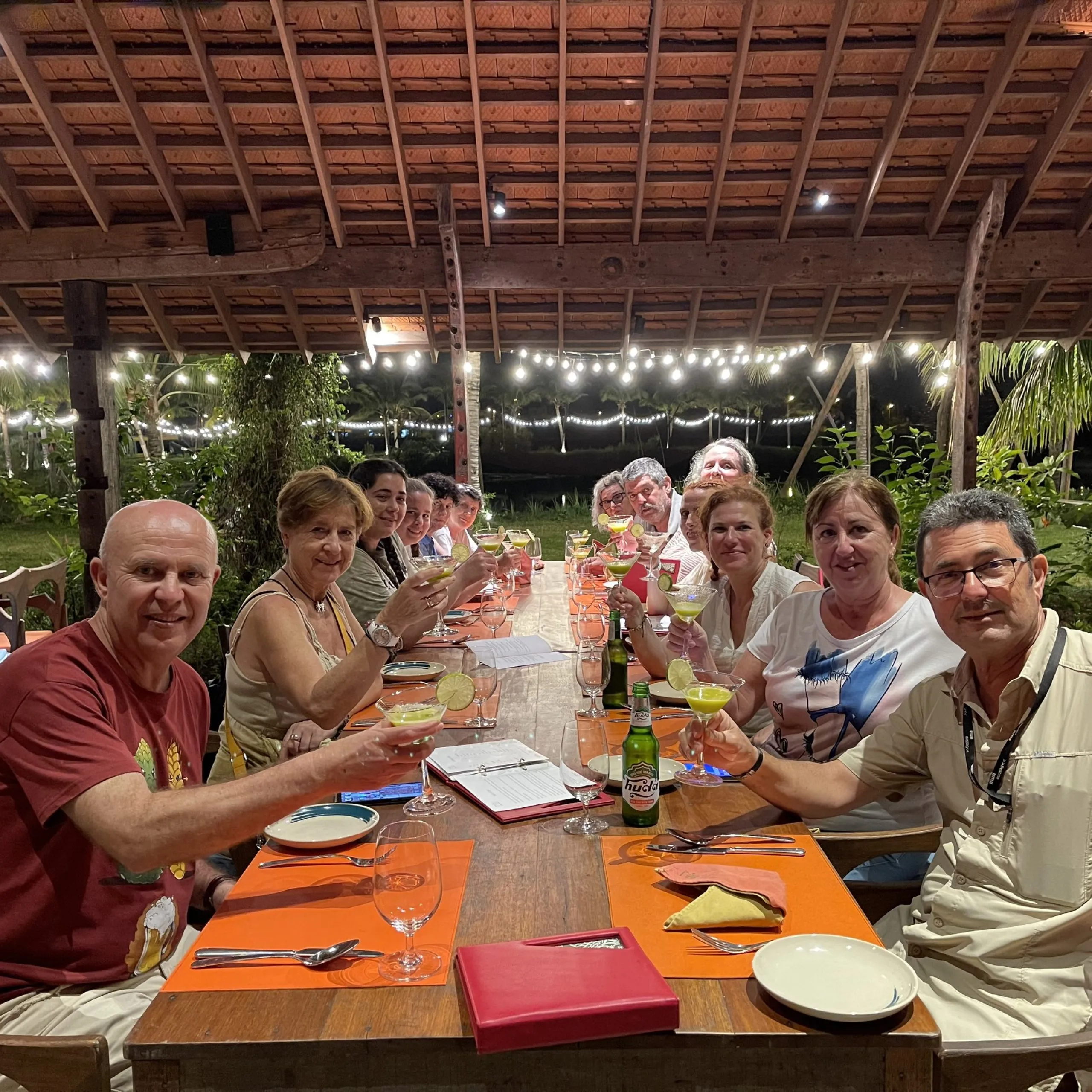
After your pick-up at Siem Reap airport and hotel check-in, the afternoon is spent on the water. The Tonle Sap is the largest permanent freshwater lake in Southeast Asia, and the villages on its edge live with the seasons: houses on tall stilts stand above the water in the wet months and high above the mud in the dry ones. A boat trip through a fishing village shows a side of Cambodia that most temple-only visitors never see. In the evening, some itineraries include dinner with an Apsara dance performance.
Day 2: Angkor Thom, the Bayon and Angkor Wat
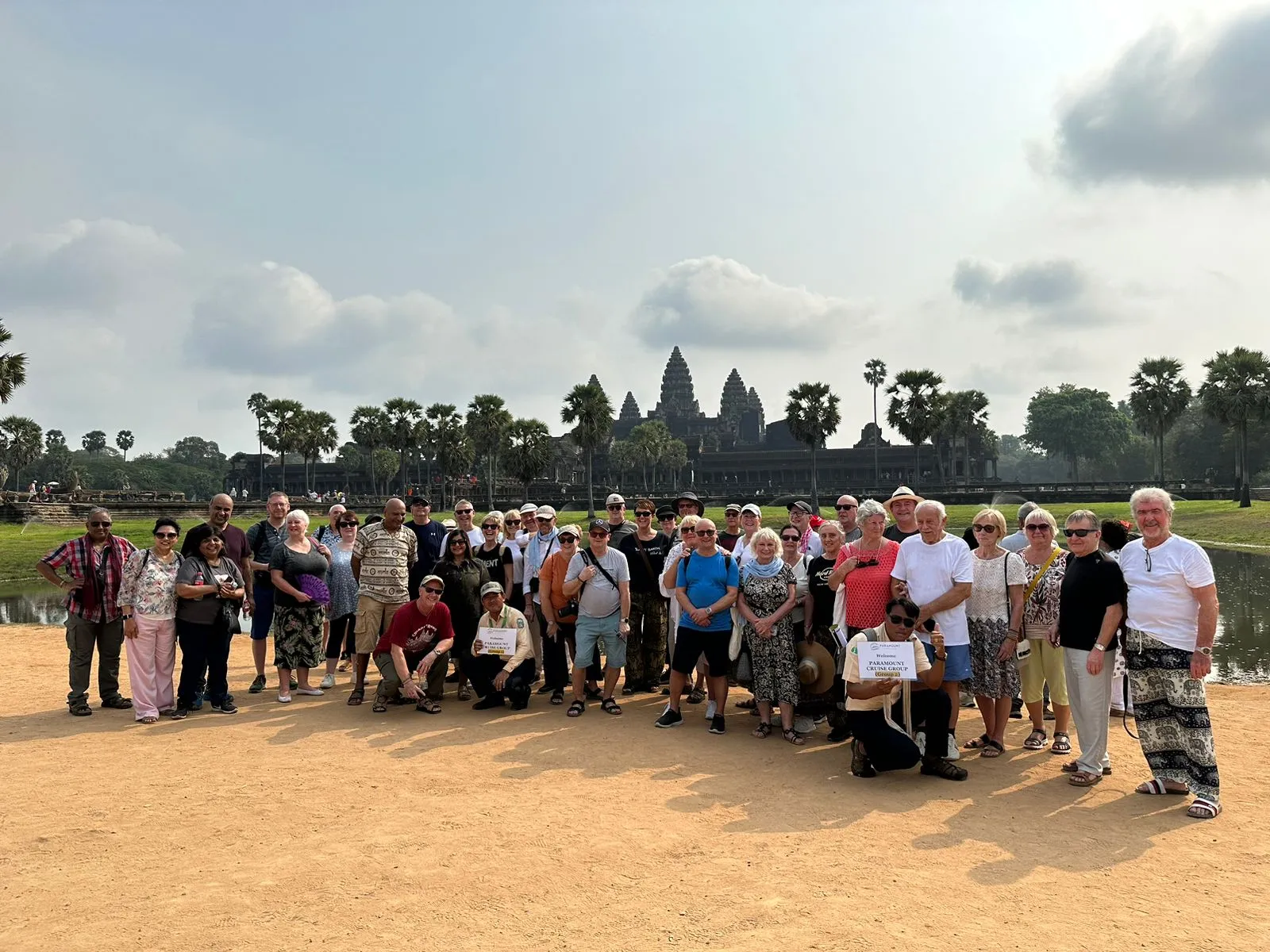
The main temple day starts at 8:00 with your guide. You enter Angkor Thom, the 12th-century royal city, through the South Gate, lined with stone figures pulling a giant serpent in the myth of the churning of the ocean of milk. Inside stands the Bayon, famous for its 54 towers carved with serene faces, followed by the Royal Enclosure, the Phimeanakas and the Terrace of the Elephants. After lunch and a rest, you visit Angkor Wat itself in the afternoon, when the light falls on its western face and the crowds of the morning have thinned.
Day 3: Ta Prohm or the outer temples, then departure
On the last morning you can choose between Ta Prohm, where huge silk-cotton and fig trees grow over the walls, and a longer drive to Banteay Srei, the “citadel of women”, known for the finest carvings at Angkor. If your flight is late, there is time for both. The four-day itinerary gives Banteay Srei and the villages along the way their own day.
Sunrise, crowds and the best time of day
Sunrise at Angkor Wat is worth seeing once, but it is also the busiest moment of the day. A good compromise is to watch the sunrise, then go straight on to the Bayon or Ta Prohm while most people return to their hotels for breakfast. Mid-day, from about 11:00 to 14:00, is the hottest time; we plan lunch and a rest at the hotel then and return to the temples later in the afternoon.
When to visit Siem Reap
The cooler, dry months from November to February are the most comfortable and the most popular. March to May is hot. From June to October the rainy season brings short, heavy showers, green landscapes and fewer visitors, and the Tonle Sap villages are surrounded by water. Angkor can be visited all year; we simply adjust the daily rhythm to the weather.
Practical tips from our team
- Temple pass: entrance to the Angkor archaeological park requires a pass with your photo. In our itineraries the entrance fees listed are included.
- Dress code: shoulders and knees must be covered to enter the upper levels of Angkor Wat and some other temples.
- Water and sun: bring a hat and sunscreen; water is provided during excursions on our tours.
- Combine with Vietnam: Siem Reap has flights to Ho Chi Minh City and Hanoi, so Angkor fits easily at the end of a Vietnam trip, as in our Vietnam & Cambodia 14 days or 10 days itineraries.
Frequently asked questions
Is one day enough for Angkor?
One day covers Angkor Wat, the Bayon and Ta Prohm, but it is tiring. Two to three days let you see more and avoid the hottest hours.
Is a guide necessary at Angkor?
Not required, but a good guide explains the carvings and history, chooses the order of visits to avoid crowds and handles transport between temples that are kilometres apart.
How much does a 3-day Angkor tour cost?
Our 3-day Siem Reap itineraries start from US$420 per person, including hotel, guide, transport, entrance fees, the Tonle Sap boat trip and the meals listed.
Can I visit Angkor as part of a Vietnam trip?
Yes. Most of our guests add two or three days in Siem Reap at the end of a Vietnam itinerary, flying from Ho Chi Minh City or Hanoi. See our Cambodia tours.
Written by the Metta Voyage travel team in Hanoi. Last updated October 2026. Prices are Metta Voyage’s published “from” prices; your quote confirms the exact price for your dates. Photos: Metta Voyage.