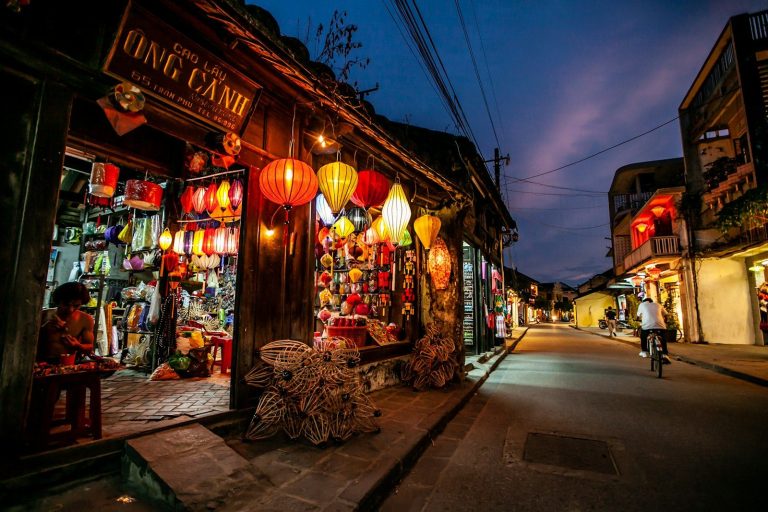

Few travelers realize that two of Asia’s great mountain regions sit side by side. Yunnan, in China’s far southwest, is a land of old trading towns, snow peaks and minority cultures. Just across the Red River lies Lao Cai province and Sapa, with its rice terraces and Hmong villages. Linking them overland turns two separate holidays into one journey, and avoids a flight back through a big hub. This guide explains how the route works, how long you need and what to expect at the border.
The 14-day Yunnan and northern Vietnam route
Our Yunnan to Northern Vietnam Overland private tour takes 14 days: seven in Yunnan and seven in Vietnam.
| Day | Places | Overnight | Hotel class |
|---|---|---|---|
| 1 | Arrive in Kunming; Green Lake in the late afternoon | Kunming | 4★ (5★ on request) |
| 2 | The Stone Forest at Shilin | Kunming | 4★ (5★ on request) |
| 3 | High-speed train to Dali; Three Pagodas and Dali Old Town | Dali | 4★ (5★ on request) |
| 4 | Erhai Lake, the Bai village of Xizhou and Zhoucheng | Dali | 4★ (5★ on request) |
| 5 | Train to Lijiang; Black Dragon Pool and Lijiang Old Town | Lijiang | 4★ (5★ on request) |
| 6 | Jade Dragon Snow Mountain, Blue Moon Valley and Baisha | Lijiang | 4★ (5★ on request) |
| 7 | Slow morning, then the train back to Kunming | Kunming | 4★ (5★ on request) |
| 8 | Train to Hekou, cross the border into Lao Cai, drive to Sapa | Sapa | 4★ hotel or mountain resort (5★ on request) |
| 9 | Muong Hoa valley trek to Lao Chai and Ta Van | Sapa | 4★ hotel or mountain resort (5★ on request) |
| 10 | Cat Cat village; drive to Hanoi | Hanoi | 4★ boutique, Old Quarter (5★ on request) |
| 11 | Hanoi: Ba Dinh, Temple of Literature, Old Quarter and street food | Hanoi | 4★ boutique, Old Quarter (5★ on request) |
| 12 | Drive to Halong Bay and board your cruise | Halong Bay | 4★ cruise cabin (5★ on request) |
| 13 | Halong Bay morning; return to Hanoi | Hanoi | 4★ boutique, Old Quarter (5★ on request) |
| 14 | Free time and departure from Hanoi | — | — |
Yunnan: Kunming, Dali and Lijiang
Kunming sits at almost 1,900 meters and is known as the City of Eternal Spring for its mild weather all year. It is your base for the Stone Forest, a UNESCO-listed field of limestone pillars about 90 minutes away, and the starting point of the train to the border.
Dali, two hours away by high-speed train, lies between the Cangshan range and Erhai Lake. The Three Pagodas of Chongsheng Temple stand in front of the mountains, and the villages along the lake belong to the Bai people. In Xizhou, an old trading village, you visit a family courtyard house with carved wooden screens and try baba, the local flatbread, warm from the oven.
Lijiang, about 90 minutes further north by train, is a UNESCO World Heritage old town of canals, stone bridges and wooden houses, home to the Naxi people. On clear days Jade Dragon Snow Mountain is reflected in Black Dragon Pool. A cable car takes you to one of the mountain’s high meadows, chosen on the day according to the weather and your comfort with altitude.
How the Hekou – Lao Cai border crossing works
This is the part people ask about most, and it is simpler than it sounds.
- Take the morning high-speed train from Kunming to Hekou, about four hours through the hills of southern Yunnan. We book a morning departure so you reach the border with time to spare.
- Your Chinese guide accompanies you to the border post, where you complete the Chinese exit formalities.
- You walk across the bridge over the Red River into Lao Cai and clear Vietnamese immigration.
- Your Vietnamese guide and driver meet you on the other side, and you drive about an hour up into the mountains to Sapa.
Allow about one to two hours for the crossing itself. Keep your luggage manageable, as you carry it across the bridge. Vietnam is one hour behind China, which gives you a little extra afternoon on arrival.
Visas: you need permission to enter China and Vietnam separately. Check current visa rules for your passport, including whether your Vietnam visa or e-visa is valid for entry at the Lao Cai land border, as land crossings can follow different lists from airports. We check this with you when you book.
Sapa, Hanoi and Halong Bay
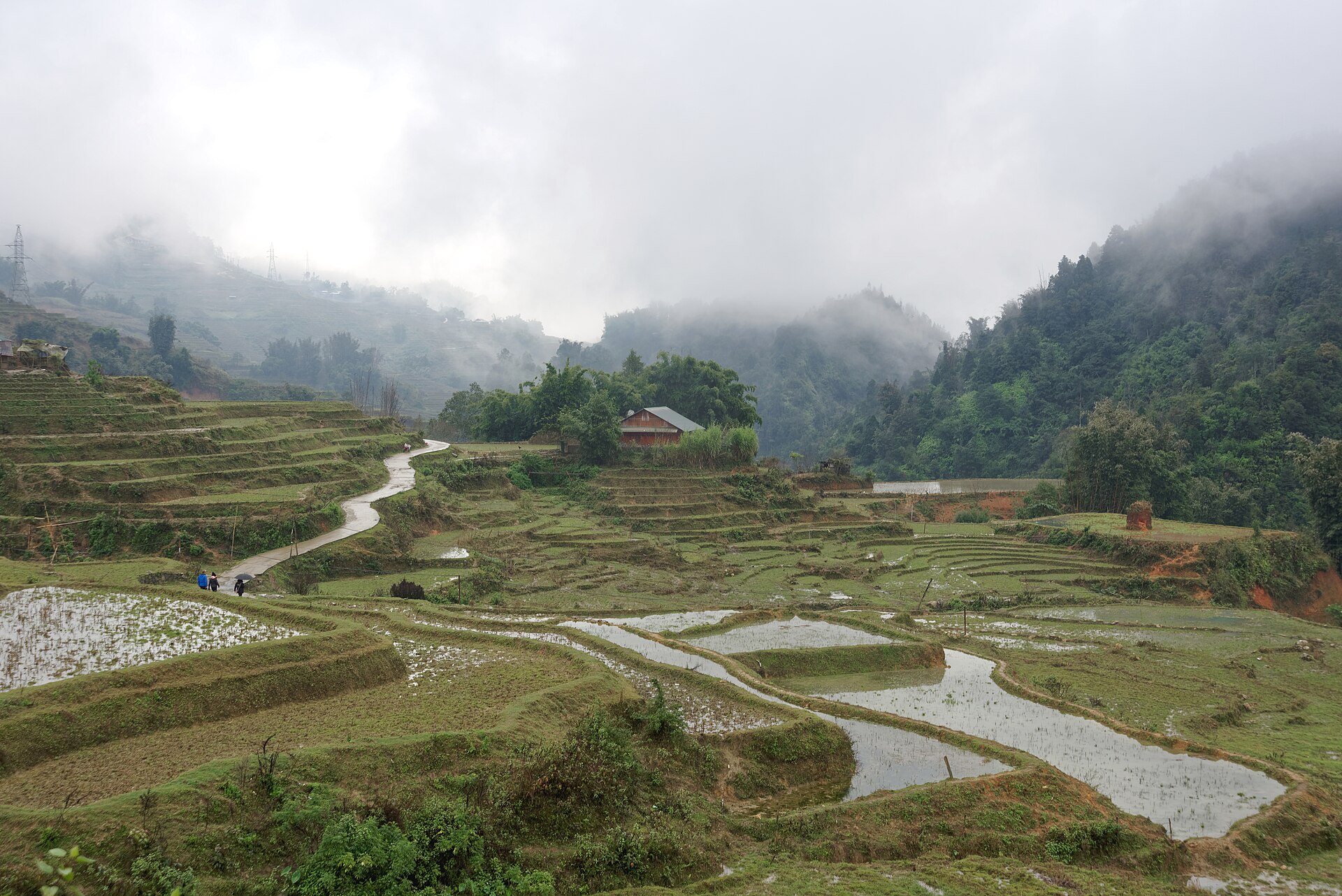
In Sapa you spend a full day on foot in the Muong Hoa valley, following paths along the rice terraces to the Black Hmong village of Lao Chai and the Giay village of Ta Van. The walk covers about 10 to 12 kilometers and can be shortened, or partly done by car, if you prefer. The next morning, walk down to Cat Cat, a Hmong village with a small waterfall and craft workshops, before driving to Hanoi on the expressway, about five to six hours with rest stops. For more walking ideas, read our guide to the best trekking routes around Sapa.
Hanoi brings a complete change of rhythm: lakes, temples and the busy lanes of the Old Quarter, with a street food walk to finish the day. Then you drive about two and a half hours to Halong Bay for a night on a cruise boat among the limestone islands, with a cave visit or kayaking in the afternoon and tai chi on deck at sunrise.
When to go
| Months | Yunnan | Sapa | Hanoi and Halong Bay |
|---|---|---|---|
| March – May | Dry, clear, mild; spring flowers | Pleasant; terraces being planted | Warm, some haze in March |
| June – August | Rainy season; green but cloudy peaks | Rainy; very green terraces | Hot and humid; summer storms possible |
| September – November | Dry, clear views of the snow peaks | Terraces golden in September and early October | Comfortable and mostly dry |
| December – February | Sunny in Kunming and Dali; cold in Lijiang | Cold, sometimes near freezing at night | Cool and often gray |
March to May and September to November are the best months for the whole route. If golden rice terraces in Sapa are your priority, aim for September or the first days of October.
Practical tips
- Trains in China: the high-speed train tickets are quoted separately. We book them with your passport details, as China uses real-name ticketing.
- Altitude: Kunming is at about 1,900 meters and Lijiang higher, and the Jade Dragon Snow Mountain meadows are well above that. Travelers with heart or breathing conditions should check with their doctor.
- Money: you need Chinese yuan on one side and Vietnamese dong on the other. Cards and mobile payment work well in Chinese cities; in Sapa villages, carry some cash.
- Packing: layers for cool mornings in Lijiang and Sapa, good walking shoes for the trek, and a light rain jacket in any season.
- Pace: the longest transfers are the train to Hekou and the drive from Sapa to Hanoi. Everything else is short, which keeps the trip comfortable for families with children over 10 and active older travelers.
Other ways to build the trip
The route works in reverse, starting in Hanoi and finishing in Kunming. If you would like more time in Yunnan, our 10-day Yunnan Discovery tour with Shangri-La adds Tiger Leaping Gorge and Tibetan Buddhist monasteries; Shangri-La sits at about 3,300 meters. On the Vietnam side, you can extend south to Hue, Hoi An and the Mekong Delta, as on The Best of Vietnam and Cambodia in 14 days, or keep it short with a 3-day Sapa itinerary. See all routes on our China destination page and Vietnam destination page.
FAQ
How long does the border crossing at Hekou and Lao Cai take?
Usually about one to two hours from arriving at the Chinese exit post to meeting your Vietnamese guide in Lao Cai. Your Chinese guide accompanies you to the border post.
Can we do the trip from Vietnam to China instead?
Yes. Starting in Hanoi and finishing in Kunming works equally well. We adjust the order and the train times to suit your flights.
Do we need two visas?
You need permission to enter each country. Check current visa rules for your passport, including the land border at Lao Cai, and we will confirm the details with you when you book.
Is the Sapa trek difficult?
It is a moderate walk on village paths of about 10 to 12 kilometers, with some short climbs, and it can be muddy after rain. We can shorten it or use a car for part of the way.
How much does the overland tour cost?
It depends on dates, hotel class and group size. See the tour page for the current from-price, confirmed in your tailor-made quote.
Thinking of linking China and Vietnam by land? Tell us your dates and we will send a private itinerary, usually within 24 hours. We have looked after more than 10,100 travelers and are rated 4.9 on Tripadvisor.
Call us: US +1 929 491 2828 · UK +44 7520 660929
Last updated: 26 October 2026
Photo: Jakub Hałun, CC BY 4.0, via Wikimedia Commons.